SwipeHouse
The Y Combinator-backed social network for TikTok creators. Acquired in 2021.

What SwipeHouse was
SwipeHouse was a social network built for the new wave of TikTok creators. A way for emerging creators to find, match, and collaborate with each other. You opened the app, got matched with another creator at your tier each day, and could DM, swap content ideas, or run a duet together.
SwipeHouse ranked #150 in the US App Store and earned 2,400+ five-star ratings. On the brand side, we onboarded 500+ companies to TikTok in under a year, before TikTok even had an official brand portal, making SwipeHouse the de-facto bridge between brands and creators in the early TikTok era. It went through Y Combinator’s Winter 2018 batch, raised over $1M, and was acquired by Hamster Garage in 2021.
How it started: the bunkbed years
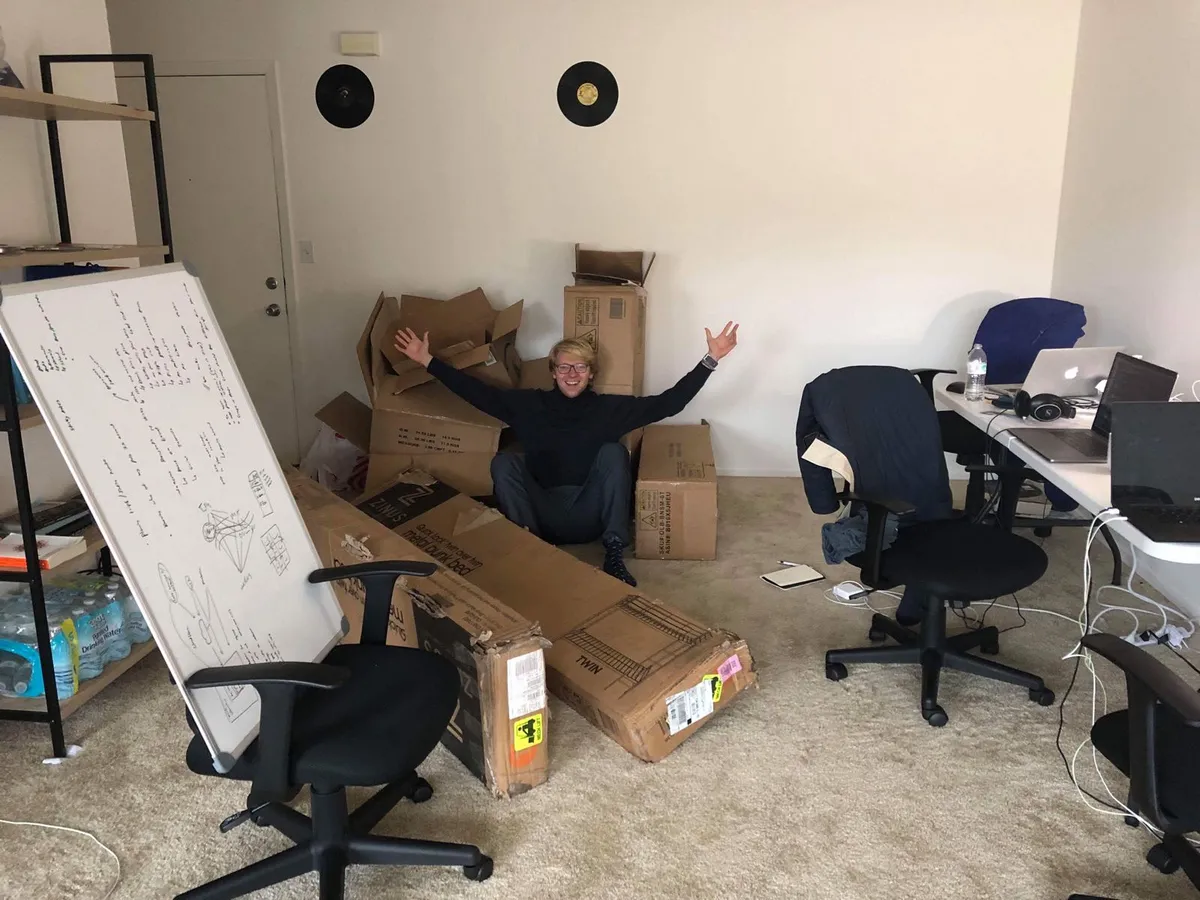
My cofounder and I met at Harvard. I dropped out at 22. We moved to 1885 California Street in Mountain View and slept in a bunkbed for three years on $20K/year while we figured out social consumer. Before SwipeHouse, we built Summer Playbook and Hangline, two campus-focused social products that taught us how distribution actually worked.
When TikTok blew up, we noticed the gap: brands had marketplaces to find creators, but creators had no native way to find each other. The peer-side was empty. We bet that solving that would matter, and we built it fast.
Why it grew
SwipeHouse rode three things at once: (1) TikTok’s creator-economy moment, since we shipped before the major brands moved in; (2) viral creator referrals, because every TikToker who joined wanted to bring their network; and (3) affiliate partnerships with creator-economy tools, which drove install-side growth. The product was simple enough that creators got value from the very first daily match.
What happened next
SwipeHouse was acquired by Hamster Garage in 2021.
After the acquisition, I went to Microsoft because I wanted to work on generative AI. They had top-tier NVIDIA GPUs and were one of the centers of gravity for DALL-E and Stable Diffusion as those models were emerging. It ended up being one of the most fun stretches of my career.
At Microsoft I ended up on the founding team of M365 Copilot and helped scale generative image AI to 100M+ MAU. The Copilot product I worked on appeared in two Microsoft Super Bowl commercials. I was promoted within six months and hired as a VP exception during a company-wide freeze.
What I learned
- Consumer social is a distribution game first, product second. The product has to be good, but if you don’t solve the K-factor on day one, you don’t survive long enough for the product to matter.
- Low burn = optionality. The bunkbed years felt brutal at the time, but the cheap runway is what let us iterate through three products before SwipeHouse caught.
- Platform waves cut both ways. Riding TikTok made us. Platform changes can also break you. Build for the wave, but plan for the day it ends.
Press & mentions


FAQ
What was SwipeHouse?
SwipeHouse was a social network for TikTok creators, a way for emerging TikTokers to discover and collaborate with each other. At its peak, it hit #150 in the US App Store and held 2,400+ five-star ratings. It was backed by Y Combinator (W18) and acquired in 2021.
Who founded SwipeHouse?
I founded SwipeHouse with my cofounder. We met at Harvard, dropped out together, and were 22 years old when we started. We spent the first three years making $20K/year sleeping in a bunkbed in Mountain View while we figured out social consumer.
Why did you build it?
TikTok was new and rising fast. We noticed creators had no native way to find each other for collabs (creator-to-creator). Brand-to-creator marketplaces existed, but nothing on the peer side. We bet that creators would want a daily “match” with another creator at their tier.
How did SwipeHouse grow?
A mix of viral creator referrals (every TikToker that joined wanted to bring their network), affiliate partnerships with creator-economy tools, and timing. We were early to TikTok before the major brands moved in. The creator economy was the right wave.
How many brands did SwipeHouse work with?
We onboarded 500+ companies to TikTok in under a year, before TikTok itself had an official brand portal. For a stretch of the early TikTok era, SwipeHouse was the de-facto way for brands to find and work with creators on the platform.
What happened to SwipeHouse?
SwipeHouse was acquired by Hamster Garage in 2021. After the acquisition I went to Microsoft because I wanted to work on generative AI. They had top-tier NVIDIA GPUs and were a center of gravity for DALL-E and Stable Diffusion as those models were emerging. I ended up on the founding team of M365 Copilot, helping scale generative image AI to 100M+ MAU.
What did you learn building SwipeHouse?
Three big lessons: (1) Consumer social is a distribution game first, product second. The product has to be good, but if you don’t solve a creator’s K-factor you don’t survive. (2) The bunkbed years taught me that low burn = optionality. (3) Riding a platform wave (TikTok) cuts both ways. It makes you, then it can break you when the platform changes.
Working on something in consumer social or creator economy?
I advise and angel-invest in seed-stage consumer + creator economy companies. If you’re building, I’d love to hear about it.